Window Light or Studio Light: Two Editorial Moods
Window light or studio light shapes a fashion editorial’s mood in different ways; learn what each reveals about fabric, setting, and the story you want.
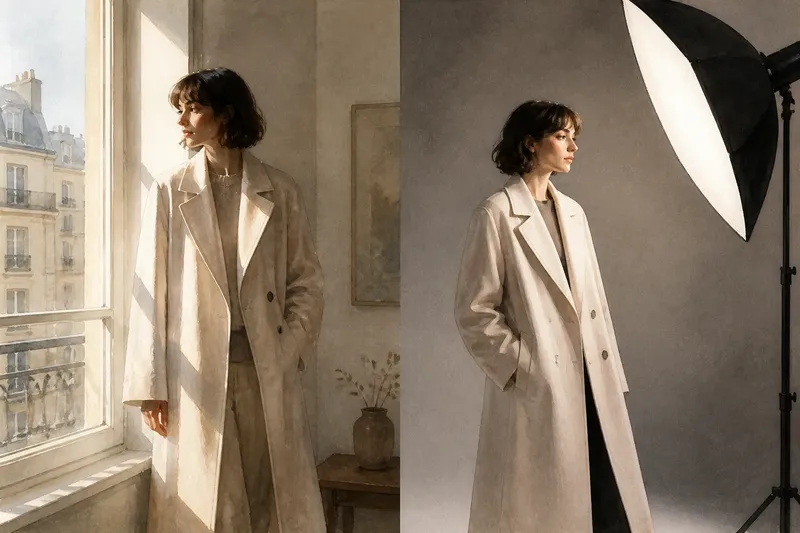
A model in a pale coat stands beside a tall apartment window, one sleeve catching the soft afternoon glow while the other fades into shadow. Move that same coat beneath a studio softbox and the scene changes: the cloth may look crisp and polished, the shadows deliberate, the room no longer part of the story. In fashion photography, the choice between window light and studio light is not simply about brightness. Each source suggests a different relationship between garment, body, and place.
What does window light bring to a fashion image?
Window light connects a photograph to its surroundings. Even when the frame excludes the window, a broad patch of illumination or a gradual fall into shade can imply a room, a particular hour, or a figure turned toward the day. The light carries traces of the space that shaped it: a neighboring building may soften it, a pale wall may return it, and a narrow opening may draw a directional stripe across a jacket.
That connection often gives clothes a lived-in presence. Linen can appear relaxed, knitwear can keep its irregular texture, and a coat can seem to belong to a person moving through an actual interior rather than posing on a blank stage. The effect suits editorials built around intimacy, ease, or a sense of private observation.
Window light is not automatically gentle or flattering. Direct sun can create hard-edged shadows and bright patches that distract from a face or garment. On a cloudy day, the light may be broad and low in contrast; near sunset, its color can warm a white shirt or alter the impression of a cool gray suit. The window’s direction, nearby surfaces, weather, and time all become part of the visual decision.
What can studio light make more deliberate?
Studio light gives the photographer more control over where illumination falls and how quickly it fades. A large softbox close to the model can create broad, smooth light, while a smaller source placed farther to the side can produce firmer edges and more pronounced shadows. A reflector or white card can lift dark areas; a black panel can keep light from spilling back onto the subject.
This control can make a fashion image feel composed, graphic, or highly finished. A clean background keeps attention on silhouette and styling. A carefully shaped highlight can describe the curve of a satin sleeve, while a restrained shadow can preserve the shape of a dark jacket. Studio light is useful when the concept depends on repeatable color, a clear outline, or a setting that should feel constructed rather than discovered.
Control does not require a complicated array of equipment. A single strobe with a softbox, or a continuous LED light with diffusion, can establish a distinct direction. The important choice is how the source relates to the subject: close and broad for softer transitions, or more focused and angled for stronger shape. Studio work can also imitate the direction of a window, but it does so as a designed cue rather than a condition inherited from the room.
How does each source change the reading of fabric?
Light reveals material through texture, reflection, and shadow. A soft window source often shows the small surface variations in wool, cotton, or washed denim without making them appear sharply etched. Its changing intensity across the frame can also make a garment feel embedded in its surroundings. That can be an advantage when the editorial is about how clothing inhabits a place, but less helpful when every detail needs to read evenly.
Studio light can isolate those qualities. A broad source may give a smooth surface to silk or polished leather, while a narrower, more directional light can draw out weave, pleats, or seams. Shiny materials need particular attention: a reflective surface records the shape and position of the light source, so a softbox may appear as a bright rectangle in leather or jewelry. Moving or reshaping the source can change that reflection more effectively than simply increasing its brightness.
Color also shifts with the source. Daylight through a window may vary from cool to warm, and mixed interior lighting can introduce a second color cast. Studio flash and continuous fixtures have their own color characteristics, but can be selected and balanced to keep a set more consistent. A photographer working with a color-sensitive garment should check the camera’s white balance and a neutral reference under the actual light, rather than relying only on the apparent color in the room.
Which mood suits the story you want to tell?
Window light often suits a story of proximity: a model pausing in a doorway, a coat worn over ordinary clothes, or a close portrait that feels attentive rather than staged. It can suggest softness without turning the subject sentimental, especially when the light has a clear direction and the surroundings remain visually quiet. It also makes sense when the location itself matters to the editorial.
Studio light is often a stronger fit for a story centered on shape, precision, or visual contrast. It can give a sculptural dress a clear outline, keep a collection visually consistent across several frames, or create a deliberate separation between a brightly lit figure and a dark background. That does not make studio work inherently formal. A close, soft source and an unguarded pose can feel intimate; the atmosphere comes from the full arrangement, not the room where the picture was made.
Say you are photographing a charcoal wool coat for an editorial about a quiet city morning. Near a large north-facing window, the coat could retain a muted, tactile quality while the room’s shadow suggests a private moment. In a studio, a softbox set to one side could define the lapel and shoulders against a plain gray backdrop, making the coat read as a precise design object. Both approaches serve the same garment, but the first emphasizes atmosphere and the second emphasizes form.
How should you decide between window light and studio light?
Start with the photograph’s intended emphasis, then consider what the location and equipment can support. Ask whether the image needs the room to register, whether the garment’s surface requires carefully shaped highlights, and whether the light must remain consistent across a set. These questions help separate a visual preference from a practical constraint.
- Choose window light when the setting and its available daylight contribute to the story.
- Choose studio light when you need to direct highlights and shadows with greater precision.
- Consider the fabric before settling on a source, especially with reflective, translucent, or heavily textured materials.
- Consider continuity if several images need to share a similar look despite changing locations or conditions.
- Make a small test frame with the intended garment and styling, then check skin tone, fabric detail, and background together.
A hybrid approach can be useful when one source alone does not answer the brief. Window light can provide the main direction while a white reflector softens shadow on the face. A studio strobe can add a controlled highlight in a location with useful natural light. The aim is not to disguise one approach as the other; it is to decide which qualities should remain visible and which need support.
It is rarely worth chasing a tiny change in equipment or adding lights simply to make a setup look more elaborate. If the coat, pose, and background already read clearly, a more complicated arrangement may compete with the image rather than improve it. Adjusting the model’s position, the light’s direction, or the distance from the background can be more meaningful than adding another source.
What do readers often ask about editorial lighting?
Is window light better for fashion portraits?
It can suit portraits that benefit from a visible sense of place or a quiet, natural falloff across the face. A studio source may be preferable when the brief calls for more even control or a repeatable look across multiple frames.
Can studio light look like daylight?
Yes. A broad, diffused source placed to one side can suggest light from a window, especially if the shadows remain consistent with that direction. The result is still designed lighting, so the photographer can keep its position and character steady.
Which light is easier for clothing color?
Studio fixtures can make consistency easier to manage, while window light may change as the weather and surrounding reflections shift. Either can represent color well when the camera is set carefully and the garment is checked under the light used for the photograph.
What should guide the final choice?
Window light and studio light are not competing measures of authenticity. They are different ways to organize attention. One lets the room and its changing conditions become part of the image; the other lets the photographer shape those conditions more directly. The useful choice is the one that makes the intended detail legible without flattening the mood.
For a fashion editorial, decide what the viewer should notice first: the garment’s texture, its silhouette, the model’s presence, or the atmosphere around them. Then choose the light that supports that order of attention. When the photograph’s mood and the garment’s visual character agree, the source can recede from notice—and the clothing can carry the scene.