Fashion Photography and the Magazine Page: What Images Can Show
Fashion photography in magazines makes fabric, pose, and setting visible, while illustration clarifies design. Learn how each image shapes a reader’s impression.
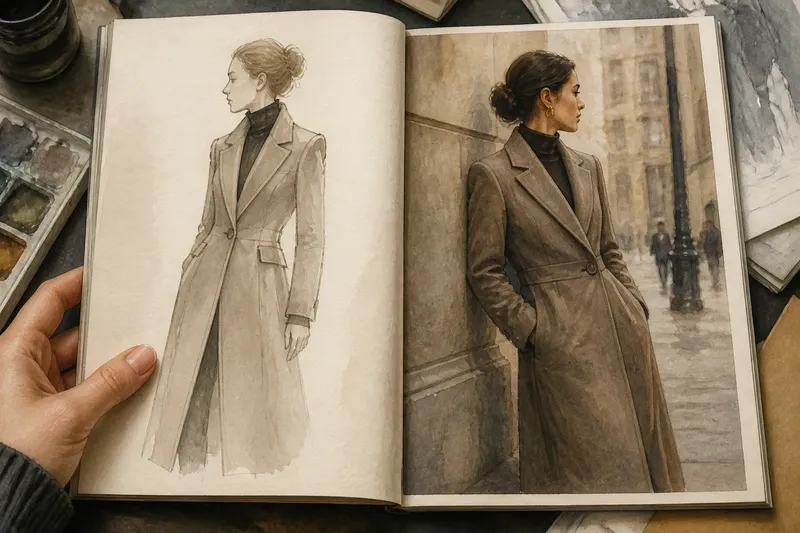
A reader turns from a fashion plate of a sharply outlined coat to a photograph of a coat worn beside a city wall. The contrast is immediate: one image simplifies the garment into a designed shape, while the other places it on a body in a particular setting. Fashion photography in magazines can make clothing feel physically present, but the camera’s choices still shape what the page asks us to see.
There is no single moment when photography replaced illustration across fashion publishing. The forms have appeared together and served different purposes; their balance varies by publication, period, and editorial aim. Looking at what each makes visible is more useful than treating one as the successor to the other.
What can fashion photography in magazines show?
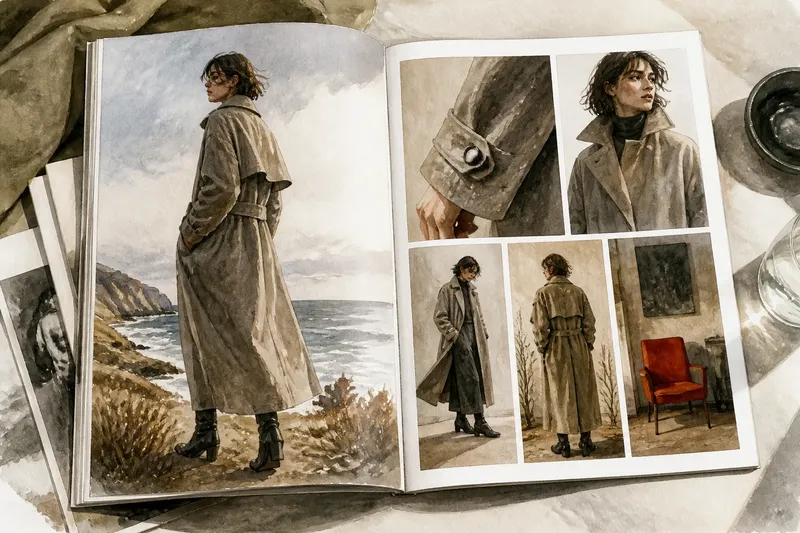
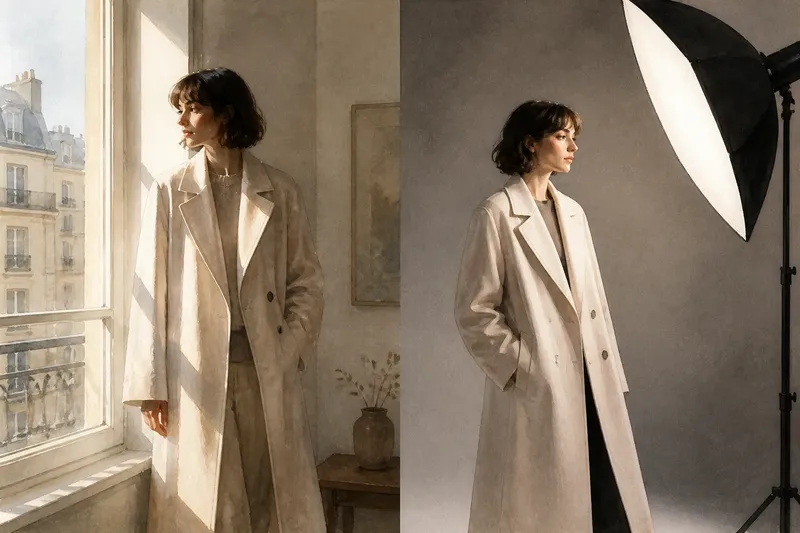
A photograph can show how fabric catches light, where a sleeve creases, and how a lapel sits on a body in a particular pose. A setting adds another layer: a studio backdrop, a room, or a street can make the same garment feel formal, intimate, or in motion. These visible details give the image a sense of a specific moment.
That sense of presence is not the same as a neutral record. The photographer selects the angle, lighting, pose, and frame; an editor selects which image reaches the page. A carefully arranged photograph can suggest spontaneity, while a plain backdrop can draw attention to construction. What readers see is both a garment and a set of decisions about how to present it.
How does a fashion plate clarify a design?
Illustration can simplify or emphasize a silhouette. An artist may make a shoulder line more legible, give a hem an uninterrupted outline, or leave out a distracting background. That makes a fashion plate useful when the page’s purpose is to present an idea or guide the eye toward a particular feature.
A drawing can also combine design choices into a coherent proposal rather than depict one garment in one photographed moment. Its omissions are part of the method, not evidence that the image is careless. But an illustration may not communicate how a textile folds or how a garment sits on a moving body as readily as a photograph can.
Which image suits a page about a precise silhouette?
Choose according to the question the page needs to answer. If the reader should notice a clean shoulder line or an unusual hem, illustration can remove visual distractions. If the reader should see how the lapel falls when worn or how fabric gathers at an elbow, photography can offer more useful evidence of appearance in a pose.
Imagine an editor preparing a page about a tailored jacket. The starting point is a story focused on the jacket’s shoulder shape, with a busy street scene competing for attention. The editor chooses a simplified drawing that keeps the shoulder line clear; the expected result is a page where that design feature is easier to inspect. If the story instead concerns how the jacket’s lapel sits on a wearer, the editor could choose a photograph with a plain background and a relaxed pose, trading some outline clarity for a view of the garment on a body.
What should readers look for in a fashion image?
- Silhouette: Check whether the outline is easy to follow; if it is, use the image to study the design, but if the background obscures it, look for a simpler illustration or photograph.
- Fabric behavior: Check for visible folds, texture, or movement; if these details are clear, the image can help explain the material, but if they are hidden by lighting or pose, seek a closer or more evenly lit view.
- Body and pose: Check how the garment sits on the wearer; if the pose reveals the feature in question, consider it useful evidence of appearance in that position, but if the pose conceals it, avoid drawing conclusions about fit from that image alone.
- Setting: Check whether the location supports the editorial idea; if it does, read it as part of the image’s mood, but if it competes with the clothing, give the garment’s details priority or look for another image.
- Framing: Check what the camera crops out; if the relevant detail remains in view, the frame serves the page’s purpose, but if it cuts off a feature the story discusses, treat the image as incomplete for that question.
- Illustration’s omissions: Check which details the artist has simplified; if the outline is clearer as a result, use the drawing to understand the intended shape, but if you need to judge fabric or wear, turn to a photograph or a separate description.
How do fashion plates and photographs answer readers’ questions?
What does a fashion plate make easier to see?
A fashion plate can make a silhouette or design detail stand out by reducing incidental detail. It suits a page asking readers to consider a shape, rather than how a particular garment appears in a specific setting.
What does a fashion photograph make easier to see?
A photograph can show a garment in relation to a body, light, and surroundings. Its usefulness depends on whether the pose and frame reveal the feature the page discusses.
Can illustrations and photographs share a magazine spread?
Yes, when each image has a distinct purpose. A drawing can clarify a design, while a photograph can show it worn; the contrast is helpful if the captions make those different roles clear.
Does a photograph show clothing objectively?
No. Framing, lighting, pose, setting, and image selection influence what becomes visible, just as an illustrator’s line and omissions do. A photograph shows a selected view, not a complete account of a garment.
What is not worth the effort?
It is not useful to label every drawing artificial and every photograph authentic. That opposition overlooks the judgment involved in both forms and tells the reader little about what a particular page communicates. Ask instead what the image reveals, what it leaves out, and whether those choices suit its subject.
Fashion photography in magazines offers a view of clothing in a body and setting, while illustration can make a design’s intended shape easier to read. Neither medium settles every question a reader might have about a garment. On the next page, notice whether the image clarifies a feature, suggests an atmosphere, or frames a particular moment; that distinction helps explain what the picture is asking you to believe.